
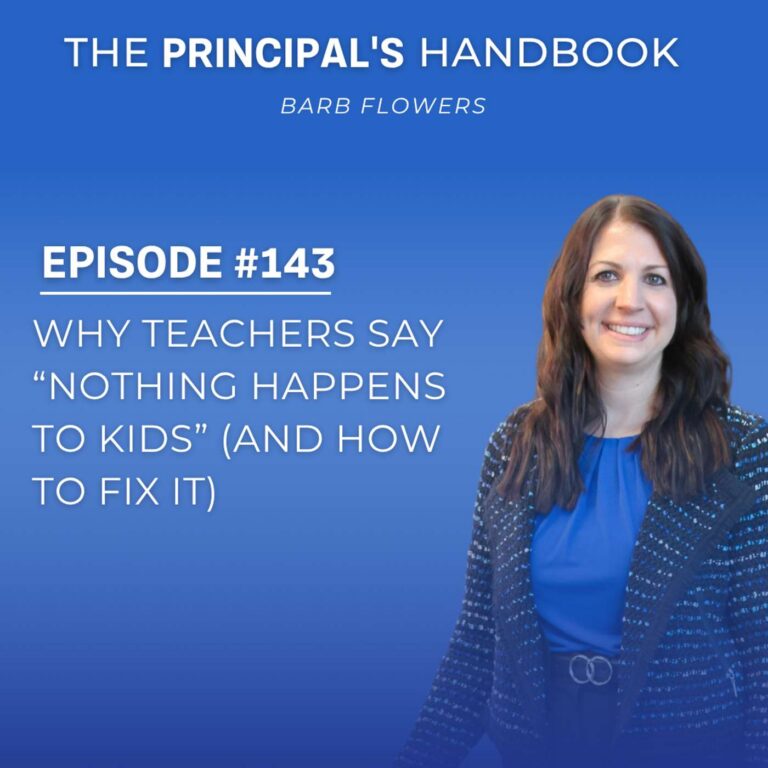
When teachers say “nothing happens to kids,” the problem is usually not a lack of effort. It is a sign that the discipline system feels unclear, inconsistent, or disconnected from the support teachers need in the moment.
School leaders should treat that complaint as a systems issue, not a personal attack. Teachers are usually asking for predictability, follow-through, and relief when behavior is overwhelming.
Why the complaint shows up
Several root causes can create the feeling that discipline is not working:
- No clear discipline system. Staff may not agree on what is classroom-managed versus office-managed, or what happens next.
- No team approach to behavior. If the principal is expected to fix every issue, the system turns reactive fast.
- Misaligned beliefs about behavior. Teachers and administrators may disagree about consequences, removal from class, or what growth looks like.
- Skill gaps in the moment. Teachers may not know how to de-escalate, regulate, or reteach behavior.
- Capacity issues. High class sizes, high-need students, and limited support can leave teachers overwhelmed.
What a clearer discipline system looks like
A visible discipline flowchart helps staff make decisions based on facts, not frustration. It should clarify what stays in the classroom, what goes to the office, and what happens next.
That clarity matters because the right response depends on factors like the student’s age, the frequency of the behavior, and whether the behavior has already been retaught. Without that shared understanding, decisions will always feel questionable.
Behavior cannot be a solo job
Behavior support has to be a team system. Principals cannot be the fixer of everything, especially in buildings with many students and many staff members.
When teachers know they are not carrying behavior alone, the work becomes more manageable. Shared ownership also helps staff focus on what they can control instead of staying stuck in what they cannot.
Align expectations before problems escalate
Another major issue is misalignment in beliefs about behavior. Staff need time to talk through questions like:
- What behaviors stay in class?
- What behaviors require removal?
- What does a meaningful consequence actually do?
- Are we trying to punish, or are we trying to reteach and grow?
Those conversations matter because punitive responses alone do not change behavior. If the goal is growth, the response has to support growth.
Teach the skills teachers need
Many teachers need direct support in de-escalation and behavior regulation. These are not always assumed skills, and they should not be left to chance.
Leaders should also bring back basic supportive practices that help students regulate and build relationships, such as morning meetings and other relationship-building routines.
Reduce the burden on overwhelmed teachers
Capacity matters. Even strong teachers can struggle when they are overstimulated, under-supported, and managing too many needs at once.
If a teacher feels like nothing is being done, the issue may be that they need more support, more structure, or a better backup plan when the principal is unavailable.
Three practical fixes
- Create a simple visible discipline flowchart. Define classroom-managed and office-managed behaviors and walk through scenarios as a staff.
- Build a behavior team system. Create a structure where teachers can get support, share responsibility, and know what happens when Tier 1 support is not enough.
- Align staff beliefs and expectations. Talk openly about what the school believes about behavior, consequences, and student growth.
The goal is not to make every behavior disappear. The goal is to make support visible, consistent, and credible. When teachers can see the system, they are far less likely to feel like nothing happens.
Frequently Asked Questions
What usually causes teachers to say “nothing happens to kids”?
Usually it points to unclear systems, inconsistent follow-through, misaligned beliefs, skill gaps, or lack of capacity—not simply bad leadership.
What is one practical way to improve discipline consistency?
Create a simple visible discipline flowchart that defines what stays in class, what goes to the office, and what happens next.
Why does the article emphasize a team approach to behavior?
Because behavior support cannot rest on one principal; it needs shared responsibility so teachers have backup and students get consistent support.
What should staff conversations about behavior focus on?
They should focus on what the school believes about behavior, what consequences are for, and whether the goal is punishment or growth.
For more context, listen to the original episode of The Principal's Handbook: Why Teachers Say “Nothing Happens to Kids” (And How to Fix It).